
"Tripling" versus "Doubling" in Orchestration
Truthfully doubling is tripling and more. Doubling is the addition of other instruments to a musical line, color, or shape. So doubling includes tripling. But in Blockbuster Hollywood orchestration, to give the sound an unfaltering level of production quality, doubling has to be at least … “tripling”.”...tripling sounds great. Thnks :)” - Vivian Khor, Composer and Sound Designer
It’s psychology. The mind can deduce a foreground by eliminating a background. But when you introduce a third element, it cannot separate two things since it can’t combine either of the other two into just a foreground or background category to then subtract from the rest.
And this is why at least tripling all your compositional elements, creates a presentation of them at a higher level that cannot be broken down by the mind, thus giving it an uncrumbling foundation of richness … a hallmark of a great orchestrator.
Anything less than tripling could be subject to the listeners critique of any single element’s qualities.
I like to say:
If you want your music to sound more expensive, make sure the listener cannot break it down into cheaper components. No one can hear through “triangulation”.
Does A Robot's Life Flash Before it's Dying Eyes?
Rediscovered this nice track I did for a movie called "The Surge" (aka "The Source"), available on DVD. The track called "Vertigo - Epic Remix", is in the Trance style. It was an attempt to bring the intelligent orchestral writing of Bernard Herrmann into the genre of electronic dance music. The effect is that of being in a spiraling vortex. To me it gives feelings of great nostalgia, but of course of a past in our future. It reminds me of the sadness a future machine lifeform might have as it died slowly, remembering all of the good things that made life worth living. It's also reminiscent of "Blade Runner", which of course is based on "Do Androids Dream of Electric Sheep?".
33
 Well, today was the big "three-three" celebration. Of course, my initial's are E.E.E. and my company is E-Cubed or E3 Music. So this was a very special birthday celebration for me, with extra numerological meaning. Three "E"s, the number 3, etc. You get it.
After working all night at the office, I came home to clean up, and spend the day with Michele and my children. We headed out to Camarillo, where they were hosting a Jazz and Art festival. The kids found playgrounds to play at, and we heard some big bands, and finished up with a lovely bluegrass group.
Then, later on in the evening, my wife treated me to a great dinner at King Fish. I had coconut-curry shrimp with pineapple and snap-peas over jasmine rice.
We then proceeded to check out "Burn After Readin" the new Coen Brother's flick. It was fun and entertaining, but pretty much rubbish. Aside from the score being the biggest sore thumb and doing nothing to rescue the botched movie, the plot was scatterbrained, and contrived. It coudl easily have been called "Burn Before Watching". I don't really even recommend it to Coen Brother's fans. It was just an excuse to fulfill a studio contract obviously. Brad Pitt was extraodrinary though, and Clooney was spot-on. It was mostly Carter Burwell's fault.
CuePop - Silent Launch

Alright, well anyone reading this, can take a peek, at:
http://www.cuepop.com/
New EVAN EVANS website - It's A Blog!
I've decided it's best for a composer site to be a blog. A blog site can be sophisticated enough that it can serve the interests of fans and clients the same. This way I can also be more up to the moment, and up to date with the site. Also, I think my old website was really a glorified blog anyway, what with the "x-ray" theme and putting all my "thoughts" up ("inside the mind"). So I think it's apropos.
I will be pre-dating and entering the content from the old site, into this blog. So no information will be lost.
"Fear Of Clowns" Rejected
Due to scheduling conflicts, with regret, Director Kevin Kangas has released Mr. Evans from his obligations to complete the original score to his upcoming Thriller/Horror flick, "Fear Of Clowns". During the last few days, to meet certain demands, Mr. Evans hired several experienced composers from around the world and worked in synchronization with them to complete the score on the tight schedule allotted. Around 50 minutes of music was completed, of which approximately 8 minutes were composed/produced by Mr. Evans with 15 extra minutes penned by Mr. Evans but rendered in another composer's studio. The other 30 minutes were derived from a complex musical instruction set which kept the other composers working within the framework of the score concept.
Any materials relating to the rejected music are available to fans upon request, via private digital delivery.
21st Year of my Father's Passing
I do very much miss the times I could have spent with my father. My mother said that when I was at his funeral service that I asked to be alone with him. I spent more than 15 minutes in mature silence with him. She said that when she came back to get me that I told her, "Daddy could breathe again if he could just catch the wind." I had just turned 5 years old two days earlier.
Perhaps even more startling is that whenever we passed the cemetary prior to his passing, I would say pointing, "Daddy's going to take me there someday!" I am sure I meant it in the most innocent of ways, remarking on a day when he promised he would take me there to see the different headstones or what-not, but I don't think anyone was prepared for how he did so, except myself.
To this day I feel I have mourned his death and that the time I spent with him was all that I was given the opportunity for. He was often on tour and we saw him infrequently. I loved him very much and I love him just as much today. I used to say that he was in heaven playing a white grand piano on a cloud. Sometimes I feel his presence, as though he is watching over me. In my early twenties I had a few dreams of such intensity and realism that they can only enforce my belief, if skeptical, in the spiritual world.
One dream that I remember occured at a bus stop in New York City. A rare dream painted in grays, blacks, and whites. It was halfway down a downsloping street, the terminal on the right with a park beyond it. There was absolutely no one around. No litter, no animals, no cars, nothing. Just the stark feeling of the buildings trapping the breeze and funneling a vortex of frozen energy around the isolated bus stop. Standing in front of the stop was my father as a young man, perhaps 25 or 30 years old looking eager but patient. I walked up to him adorning a symbolic wife and symbolic children and told him that I was to be his son, about my endeavors, and that these would be his grandchildren and his daughter-in-law. He softly drew a smile that lasted a while. I told him about the life he would have and he conceded to it and grew warm, understanding it all somehow.
I wonder if I had that dream before he died when I was a young child, or if he did as a young man, already communicating it genetically or spiritually to me by my own birth. Destiny is in us all somehow. How it gets there we cannot know before it comes.
But I know that my father enjoyed his life and wanted me to enjoy mine. And that I do. I value every moment of it, and I remember my father all along in everything that I do.
Evans Awarded "Indie Grammy" as Lalo Schifrin Congratulates
The AFIM awarded Evan Evans with their "Indie Grammy" for Best Cover Design of the year 2000 in music. It is a milestone for Evans in the professional art world. Evans has always had success in art and graphic design and this is a very welcome feather in his cap indeed.
The night was hosted by radio personality Dr. Demento in the Bowl Room of the Regal Biltmore hotel in downtown Los Angeles. Lalo Schifrin was also among the nominees that night, albeit in another category. After Evans recieved the award, Mr. Schifrin came over to his table table to congratulate him on the win.
Here is a trancription of the speech Evans made at the podium:
"I have a prepared a spontaneous speech, so hang on...
I first want to say that it is a special honor to be on the nomination list this year with my mentor and good friend, Lalo Schifrin. Lalo knew my father and has told me some great stories about him.
My father died when I was 5. The material for 'Practice Tape No.1' is from personal recordings that he left behind, no doubt for others to discover. It is my label, E3 Records' first release. I set out to create a label dedicated to the releasing of fine jazz, Classical and Film Soundtracks, culled from my father's preservation material, from other artists, and from my own film scores.
The design for the cover, as well as the whole package, was a labor of love. Working with graphic designer Edoardo Chavarin, I decided to create not only a new retro look visually, but also conceptually. I was aiming to give fans of my father the feeling that they were holding something special, something vintage that you might find inyour own attic after years gone by.
This award inaugorates that dedication to quality.
I want to thank Joe Gastwirt for handling the recordings and mastering with special care...my wife Michele René and our new son Elliot, my mother Nenette, my step-father Fonjé,...Erin, Geannette, Maxine and Herbie Hancock for challenging us to 'think outside of the box.'
Thank you."
"Indie Grammy" Award For Best Cover Design Year 2000
The AFIM (American Federation of Independant Music) Award for Art Direction on "Bill Evans: Practice Tape No.1" for the CD releases in the year 2000.
Film Scoring! Not Film Music.
Film music is the residue of a film score. It is merely the tangeable version of a film score. What's important to remember is that a master film composer is writing this "music" to a film. They are scoring notes on sheet paper to connect visual emotions with the vibrance and resonance of sound, often music. So, the essence really of a film score has nothing to do with the music, but rather the element that comes out when it is connected with the image.
In some cases the "score" may be sound concréte (based on natural sounds). Even more so, if you take that element away from the film it's inherent will and force is lost, especially if you have not previously experienced the visual connection. You may be able to construe your own connections with your own imaginings, evoking wonderous and furous thoughts, creating an enjoyable experience and like toward the recording, and that might be pleasureable to the ego of the original composer. But nothing will please the composer more than the reflections you express dealing with the element of combination or lack of combination (Bullitt chase scene) between the emoting of his work and the emoting of the film's mechanics (Actors, Visuals, etc.).
Often is the case where a composer experiments with, or even bases his entire style upon, creating a score that works in it's heightened state with film, and simultaneously as solely a listening experience, and even in some cases as stand alone concert works (Magnificent Seven, Altered State) where no one might ever know their link to the art of film. Some composers have been akin to working out a concert version or medley of a score, reshaping the structure and development so that it will fit a concert goers and fellow composers ear.
And in some bold moves, filmmakers are transcending the embodiement of the composer, and "scoring" their films quite intelligently with concert works (Stanley Kubrick, Spike Lee). The results are startling, and always shake things up a bit in the film scoring field. But it is anyone's right to use the power of film scoring. You needn't be a musician, and I may be so bold as to say, you needn't be musical to use it's power. You just need to be able to understand what it is. Film Scoring not film music.
Elliot William Evans Born
On this day, October 2nd, Elliot William Evans, son of Evan and Michele, was born. His birthweight was 7 pounds 5.5 ounces and he was 21" in legth. A tall boy!
You can visit his website at http://www.elliotevans.com
Body Of Work - "Record Business"
| "Different Lines" Jazz Performed by On The Mile E3 Records | November 2001 Compact Disc |
Acted as Executive Producer | |
| "Very Early: Volume One" Jazz Performed by Bill Evans E3 Records | January 2001 Compact Disc |
Acted as Record Producer and Art Director. | |
| "Practice Tape No.1" Jazz Performed by Bill Evans E3 Records | August 2000 Compact Disc |
Acted as Producer and Art Director. Recieved highest honor from the AFIM for the best cover design of the year 2000. | |
Classical Commission From The United Nations
"Freedom Of Expression", a five-part suite of tone poems, was commissioned by a subdivision of the United Nations, UNESCO. Five works: "Suppression", "Isolation", "Temptation", "Inspiration", "Freedom Of Expression". The works were of varying ensembe combinations, using such rare colors as Hammered Anvil, 2 Harps and 6 French Horns, Marimba among others.
A True Film Composer Is About Innovation In Every Way (Draft)
The basis of composing is innovation and creation. Just as in literature when you are writing a composition, you should not use strings of words the way anyone has before or you might be branded a hack, or the likes. Instead you must script in original ways. Such is the basis of innovation and creation of which composing in itself is all about.
If you accept this than you can rule that composers who, for instance, can create an original melody, but have nothing new to say orchestrationally, by logic, are not truly composing, as all they are really doing is ORCHESTRATING their original melodies, using pre-existing orchestration techniques none-the-less. In this scenario, they would be an original melody writer and perhaps a very good orchestrator yes, but that is not enough to be called a composer.
Just as every element in prose and literature must be original, outside of the use of the alphabet, grammer, and words, and so every element in composing music should also be original and non-derivative outside of the notes, theory, and performance, respectively. In the end, a real composer must merge and simultaneously wield the power of Orchestration & Orchestral Device, Pitch, Melody, Structure, Harmony, Rhythm, and Feeling such that they are each motivated by the other and no one can be seperated from each other without the one, in isolation, being destructed to undecipherable form ... each one dependant upon the other and collapsing at another's dissappearance.
When comparing music writing to writing literature an interesting missing dimension is revealed between the two. In literature there is no direct element of color as there is in music. On top of the language of music describing and expressing in a way that makes a person feel a certain way, as would reading a poem or story, there is the element of instrumentation and orchestration that has no parallel in writing literature. The best analogy is if you were to write different letters, words, sentences or paragraphs with different colored inks and in different shadings. Now if you were reading a wonderfully original poem and every succeeding word were colored in the next color in the rainbow, you might think something is off. Where the writer was very original with their words and story (melody in music), they seem to lack the ability to be innovative with the use of color (orchestration in music). At this point, if it was acceptable in this analogy that color was an inherent part of literature, you might decide to move on to someone else's work seeing quite blatantly that this person was not entirely original with the medium.
So, you can see that if you are conscious of the degree of innovation that each element in a piece of music has, that you can more easily see right through a composer. In fact, as you develop this technique of listening for all-round innovation you might be surprised to see that a composer of this caliber is quite rare. You will also begin to notice certain nuances and creativity decreases in each individual element that can help you see where a composer's attention might have shifted to another element, forgetting to also pay close attention to the originality of the first element at hand. Honestly this can happen to anyone, and is forgiveable. As John Corigliano (Altered States, The Red Violin) said,
"Composing is the most difficult thing to do in life."If you subscribe to the theory of the "basis of composing" discussed here than you can see how true that statement is over all other things creative on earth. Even over filmmaking, which is still in it's infancy.
This logic shows how important it is that a true composer actually incorporate idiosyncratic instrumental devices into the basis of their compositions. Bernard Herrmann and Igor Stravinsky are probably the best cases in point. For instance, Herrmann's famous cue from the score to "Psycho", which most of you ought to know and be able to hear in your head at this moment, simultaneously uses:
Orchestral device - Arco & Pizz StringsNow, not one of these alone or even some of these in combination with each other creates that cue from the music of "Psycho". Go ahead and read one element above and decide if it is enough to describe the exact sound of Psycho. Of course not. There are many pieces that use "cascading entrances going deeper and deeper" in a different way that never eludes to the Psycho sound or music, many pieces that use "repetition in straight rythmic succession" in a different way, etc...
Pitch - high pitch notes
Rhythm - repetition in straight rythmic succession
Harmony - extended minor 9ths and 7ths in broad stretches
Structure - cascading entrances going deeper and deeper
Feeling - intense vigorous playing in a straight deliberate tempo
Melody - fragmented motif in various pitch placements and contortions
The best example of whether a film composer is truly composing non-derivatively, on every level, is if the music can be played in a simplified form and still remain presentable (not just recognizeable). If one element mentioned above is removed, the music should not continue to be presentable. Maybe recognizeable, but it should not be presentable in, say, a concert setting, without it sounding off base or incongruent with the original. Enter, the PIANO. If you can play a certain score on PIANO and it is presentable, then it is a dead giveaway that the composer is not truly composing, but perhaps is only a melody writer who orchestrates or some other combination of the elements aforementioned. Writing a great melody that is original and then applying the orchestrations from, for instance, Gustav Holst's "The Planets", is not enough to be really considered a composer. Because again, composing is about innovation on every level and that would be derivative in one respect. That is why a true composer is someone who is entirely original, or at least the majority of the time in motivation and execution. Gustav Holst's orchestrations were his original as were the reasons he did them in the first place. They were not to make a melody or set of melodies or lines that he wrote to come out on the orchestra but rather the lines he imagined couldn't be concieved without the orchestra being there in the first place.
It is the opinion of serious composers who subscribe to this logical philosophy of the "essence of composing" that concur that certain film composers are truly composing and others are not. Black and white. It is a strong orthodox view of composing, but it is really needed if you are to give any respect to those composers who standout as truly innovative and thus truly genius.
Here's some that fit the list through at least more than 50% qualifying scores:
TRUE COMPOSERS:
Bernard Herrmann
Jerry Goldsmith
Elliot Goldienthal
Howard Shore
Ennio Morricone
Dmitri Tiomkin
Dmitri Shostakovich
Sergei Prokofiev
James Newton Howard
Thomas Newman
NOT TRULY COMPOSING AS IT IS DEFINED:
John Williams (Despite some valid scores)
Miklos Rozsa
Bruce Broughton
Randy Eidelman
BORDERLINE:
Danny Elfman
Randy Newman
Marc Shaiman
James Horner
Alan Silvestri
David Newman
Wedding of Michele and Evan Evans
On May 30th, 1999, at the Descanso Botanical Gardens in La Crescents, CA, on the same grassy area that's been the home of many Jerry Goldsmith concerts, Evan Edward Evans married Michele Rene Singer.
Notes From Jerry Goldsmith Seminar
Everything you ever wanted to know about Evan Evan’s Sporadic Notes of the Jerry Goldsmith Seminar of April 1996 Somewhat Organized, but you were too afraid to ask...
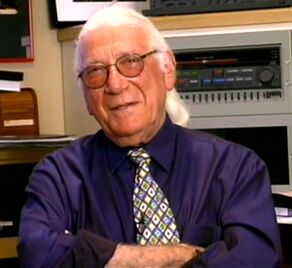
CONCEPT/MISCEstablish some thematic idea around the concept of the film
Repeat it quite often in different shades throughout the picture
Enhance emotions
This moves the story forward
Do not illustrate the evident
Create an atmosphere and wait until something happens to the main character
Less is better
(Jerry Loves the use of Silence(Emphatic Use))
Sometimes, in a crunch, Jerry’ll give the sketch directly to the copyists
Jerry said he was alot “cueer” before, then now
A good composer is like a method actor
You have to feel the characters
DIRECTOR/PRODUCERTalk in terms of Drama
Don’t intellectualize the music, just translate the drama in your style
Collaborating
The more you do it, the better the result
When a producer has a hard time articulating what he wants to convey, just keep going over it until you get it
Keep the conversation going
You hope the filmmaker has enough respect for you to listen to what you have to say
WORKING PROCESS/MUSIC
Stuck?
Stop and go and play it into the computer
Play it back with picture
Then it works or it doesn’t work and you fix it, and your not stuck anymore
Ideally it’s best to start from the beginning and score through to the end
If there seems to be difficulty in making something work sometimes it’s because the scene is badly edited
The best editors have an inate sense of story and rhythm
The rhythm of the film should work with the rhythm of the music
Jerry tries to write 2 minutes a day, but no more than 3
Getting the right tempo for a scene is sometimes harder than getting the notes
Harp & Piano in Unison
Piano Solo is nice texture
Never echo the orchestra with the piano, just complement it
Entrances
Try to find a pattern
DIALOGUE
Changing dynamics is a very good tool
When people talk put breaths into the music
Breath for a few seconds here and there
Be sparse under dialogue
Other composers are bolder, but less is more
SESSIONS
Use clicks when working with the orchestra at a session
Eye contact with players is extremely important
Dubbing
Trust your music editor
Boring
The mixing engineers just go back and forth on one line of dialogue
Average 7 to 10 Minutes a day in 2 session blocks
QUOTES (Chronologically)“Creativity is a fear driven life”
“How the film impacts us, is how we should express ourself musically”
“A composer is more than a composer, he’s a mediator”
“Remove the panic!!!”
“Never be intimidated by any instrument”
“You have to have a good dramatic sense”
“Temp. music is a new syndrome”
“Sheer stupidity does upset me”
“‘we’re paying you so much!’, well this is not by the pound.”
“Creativity is self-criticism”
Before Starting: “‘What do you hear for this picture?’, I don’t hear anything.”
“Do their idea, but your way"
Body Of Work - "Transcription"
| "Starship Troopers" Action Adventure Casper Van Dien, Neal Patrick Harris, Michael Ironside Sony Pictures Entertainment | September 1997 Motion PIcture |
Assisted composer by transcribing material and presenting to orchestrator. | |
| "The Phantom" Action Adventure Billy Zane, Catherine Zeta-Jones Paramount Pictures | July 1996 Motion Picture |
Assisted composer by transcribing material and presenting to orchestrator. | |
| "White Squall" Action Drama Directed by Ridley Scott; Jeff Bridges Buena Vista Pictures | January 1996 Motion Picture |
Assisted composer by transcribing material and presenting to orchestrator. | |


